


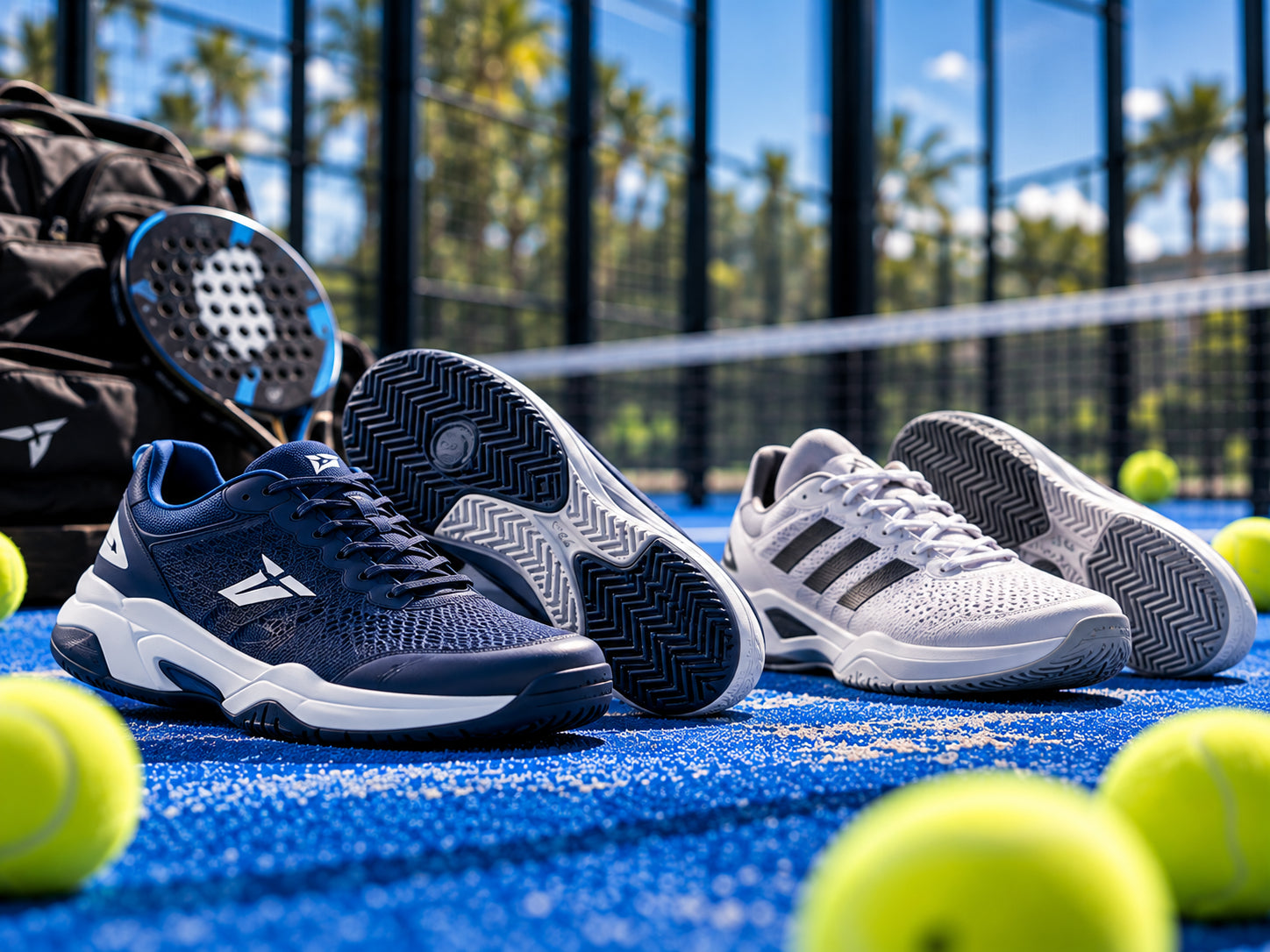

Padel shoes have a sole for artificial turf with sand and support the foot during short sprints and sideways steps. Tennis shoes with a herringbone profile often work, but pure hard court shoes and running shoes slip. For most players in Switzerland, a herringbone sole is the right choice.
- The surface decides: Artificial turf with quartz sand is fast and slippery.
- Herringbone: best all-rounder for most pitches.
- Omni or Knobs: for lots of sand and outdoor courts.
- Fit: There is a thumb's width of space at the front, the heel must not slip.
- Change: at the latest when the tread is worn down.
Why padel shoes are necessary
Most padel courts are made of artificial turf filled with fine quartz sand. The surface is fast, but also slippery, especially with the many stops and sideways movements. Running shoes are built for forward movement and offer little lateral support.
Padel shoe and tennis shoe in comparison
| Padel shoe | Tennis shoe hard court | |
|---|---|---|
| Sole | Profile for artificial turf with sand | flatter profile for hard surfaces |
| Grip on sand | very good | limited |
| lateral stability | for quick changes of direction | good, for longer distances |
| cushioning | for short, explosive movements | for long ones Rally |
Which sole for which court?
Herringbone
The classic zigzag profile. Best grip on artificial turf with a normal amount of sand.
Omni / pimples
Many small pimples reach deep into the sand, ideal for outdoor pitches.
Hybrid
Combination of several profiles if you are on different pitches play.
You don't know which surface is in your center? You're usually right with herringbone. In the damp winter outside, a deeper profile helps, see «Padel in the Swiss winter».
The 4 most important purchase criteria
- Lateral stability: A reinforced side keeps the foot in position when changing direction.
- Sole: Herringbone for most courts, non-marking is standard on many systems.
- Cushioning: on the heel and forefoot to protect knees and joints.
- Fit and ventilation: wraps around the foot without pressing.
Finding the right size
Try on shoes in the afternoon when your feet are slightly swollen and with your sports socks. There should be about a thumb's width of space at the front, the heel must not slip.


Care for a longer lifespan
- Sand Knock out: after every game from the shoe and tread.
- Dry properly: in the air, never on the heater.
- Only wear on the pitch: Asphalt wears the tread unnecessarily.
- Check the tread: Is the sole worn, the grip is gone.
Frequently asked questions
Can I play padel with tennis shoes?
Tennis shoes with a herringbone profile for clay courts often work well. Pure hard court shoes have too little support. Real padel shoes are best.
Can I play padel with running shoes?
We advise against this. Running shoes offer little lateral support and the risk of twisting an ankle increases.
Which sole is the best for padel?
For most courts the herringbone profile. Omni soles are suitable for lots of sand and outdoors.
How often should I change my padel shoes?
For two to three games per week, usually every 6 to 12 months, at the latest when the tread is visibly worn.
Are padel shoes also suitable for tennis?
Usually yes on sand and artificial turf courts. For hard courts, a tennis shoe is the better choice.
More grip on the court
Find padel shoes with the right profile, delivered from Switzerland.
To the padel shoes Advice via WhatsAppThis might also interest you
- Padel equipment for beginners: the complete one Starter guide for Switzerland
- Padel without pain: How to prevent tennis elbow, ankle and shoulder problems
- Padel in the Swiss winter and in the mountains: Which balls, rackets and shoes?
Accessed in November 2026. Tips and assessments are also based on our experience as players, coaches and Specialist dealer.
- Assessments on sole and fit: Experience from our advice and training practice
- Prices: Padel Markt range, as of November 2026


